
Australia Road Rules Changes 2025: What Every Driver Must Know
As Australia continues to enhance road safety and reduce accidents, the Australia road rules changes 2025 introduce several crucial updates that all drivers must be aware of. These changes affect every aspect of driving, from speed limits to mobile phone usage, pedestrian safety, and regulations for emerging vehicle technologies.
Staying informed about these changes made by authorities is essential to avoid penalties, maintain a clean driving record, and ensure the safety of all road users. This comprehensive guide will examine all the significant updates for drivers in 2026, providing an authoritative overview of the current driving landscape in Australia.

Table of Contents
What is Included in Australia Road Rules Changes 2025
The Australia road rules changes 2025 include a comprehensive set of updates designed to improve road safety, regulate driver behavior, and accommodate new vehicle technologies. These changes affect every aspect of driving, ensuring that drivers, passengers, pedestrians, and cyclists are all better protected. The 2026 updates build on previous reforms introduced in 2025, strengthening enforcement and clarifying rules for both traditional vehicles and emerging electric and autonomous models.
Key inclusions under the 2026 road rules changes cover stricter regulations for mobile phone use while driving, with drivers now required to use hands-free devices exclusively. Speed limits have been revised in urban areas, school zones, and residential streets, promoting safer roads for pedestrians and children. Drink and drug driving laws have become more stringent, with zero-tolerance measures for learner and probationary drivers and increased roadside testing for impairing substances.
Additionally, pedestrian and cyclist safety rules have been updated to mandate minimum passing distances and stricter compliance at crossings, reflecting Australia’s focus on vulnerable road users. Seatbelt and child restraint regulations are more robust, requiring all passengers to wear seatbelts and children to use age-appropriate car seats up to seven years old. The 2026 changes also address the rising prevalence of electric and autonomous vehicles, introducing guidelines for charging, parking, and semi-autonomous driving liability.
Overall, the Australia road rules changes 2025 provide a holistic approach to road safety, combining enforcement, education, and adaptation to technological advancements, making it essential for every driver to stay informed and compliant.
Stricter Mobile Phone and Device Usage While Driving
The Australia road rules changes 2025 impose stricter regulations on mobile phone usage to curb distracted driving. Drivers are now only permitted to use hands-free devices, such as Bluetooth systems or voice-controlled technology, for calls or navigation. Any manual interaction with a phone while driving, including texting or adjusting GPS settings, is strictly prohibited.
Law enforcement agencies have increased fines for these violations, with penalties reaching up to $550 in several states, accompanied by demerit points. This change reflects a nationwide effort to reduce accidents caused by distracted driving and emphasizes the importance of setting up navigation or music before starting a journey. Drivers who fail to comply risk substantial fines and potential legal consequences, making it imperative to adopt hands-free technology as a standard driving practice.
Updated Speed Limits Across Urban and Residential Areas
Speed regulation remains a central focus of the Australia road rules changes 2026. In urban and residential areas, many local councils have revised speed limits to prioritize safety, particularly around schools and pedestrian zones.
School zones now enforce a maximum speed of 30 kilometers per hour during operating hours, significantly lower than previous limits. Residential streets have increasingly adopted 40 to 50 kilometers per hour as standard limits to protect pedestrians, cyclists, and children playing near roadways.
Heavy vehicles, including trucks and buses, are under stricter enforcement rules when passing through these zones, ensuring that vulnerable road users are adequately protected. Compliance with these speed limits is crucial, as fines for exceeding them have increased, and drivers may also face higher demerit point penalties under the 2026 regulations.
Drink and Drug Driving Laws Strengthened
The Australia road rules changes 2025 continue the zero-tolerance approach to drink and drug driving. Learner and probationary drivers are required to maintain a 0% blood alcohol concentration, and enforcement authorities are conducting more frequent roadside testing for drugs, including cannabis, prescription medications, and other impairing substances.
Penalties for drink or drug driving are severe, encompassing significant fines, mandatory license suspensions, and compulsory participation in driver education and rehabilitation programs. These measures highlight Australia’s ongoing commitment to reducing alcohol and drug-related accidents and underline the importance of responsible driving. Any breach of these rules not only endangers the driver but also poses a serious risk to other road users, making compliance a critical aspect of lawful driving in 2026.
Enhanced Protection for Pedestrians and Cyclists
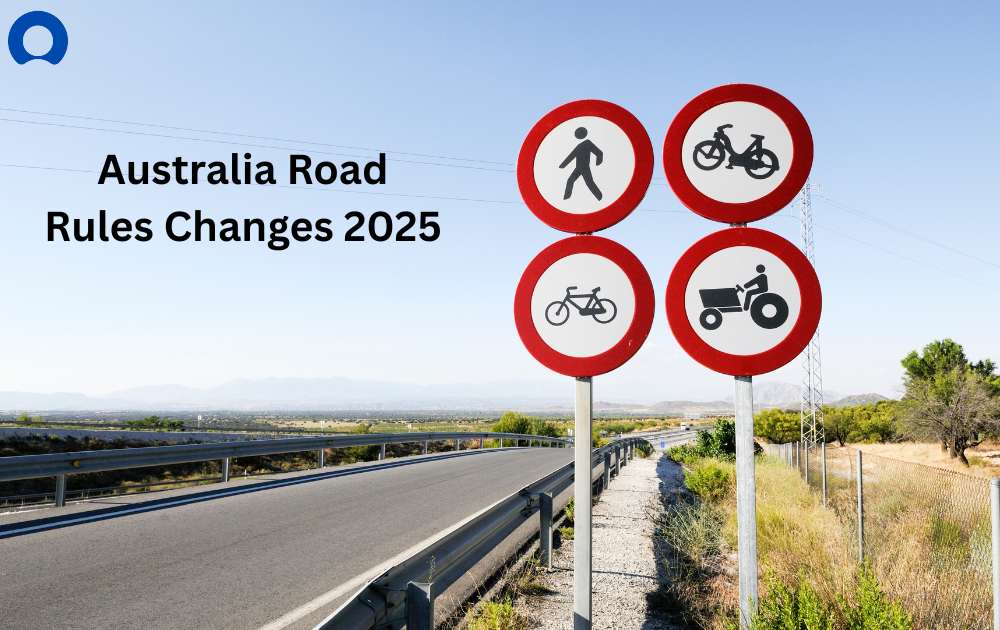
With an increasing number of Australians choosing walking and cycling as primary modes of transport, the Australia road rules changes 2026 emphasize the safety of vulnerable road users. Drivers must provide a minimum of one meter of clearance when overtaking cyclists in urban areas, ensuring their safety on narrow streets. Pedestrian crossings have also seen stricter enforcement, requiring vehicles to stop well in advance even if pedestrians have not yet stepped onto the crossing. Failure to adhere to these rules results in higher fines and additional demerit points, reflecting the heightened priority placed on pedestrian and cyclist safety. These changes not only safeguard non-motorized road users but also foster a culture of responsible driving, encouraging all drivers to remain vigilant and considerate.
Seatbelt and Child Restraint Regulations Updated
The Australia road rules changes 2026 reinforce the importance of occupant safety through updated seatbelt and child restraint requirements. Seatbelt use is now mandatory for every passenger in the vehicle, including those in rear seats, reflecting growing evidence that unrestrained passengers increase the risk of injury in collisions.
Child safety regulations have been revised to require age-appropriate restraints for children up to at least seven years old, with specific height and weight standards. These regulations are strictly enforced, and violations carry significant penalties, including fines and demerit points. Adhering to these safety requirements is not optional; they are a legal obligation that ensures the protection of all passengers.
Regulations for Electric and Autonomous Vehicles
As electric vehicles (EVs) and autonomous driving technology become more prevalent, the Australia road rules changes 2026 introduce regulations to accommodate these advancements. Major cities have implemented specific rules for EV parking and charging to manage traffic flow efficiently.
Autonomous and semi-autonomous vehicles are subject to clarified liability rules, ensuring drivers remain responsible for their vehicles even when automated systems are in use. These changes reflect the evolving nature of the Australian transport system and highlight the government’s proactive approach to integrating new technologies while maintaining safety standards. Drivers of EVs and autonomous vehicles must remain aware of these updated requirements to avoid fines and ensure compliance with the law.
Fines and Demerit Point System Adjustments
The 2026 update of Australia’s road rules includes substantial revisions to fines and the demerit point system. Infractions related to speeding, mobile phone use, seatbelt violations, and failure to yield to pedestrians carry higher penalties than in previous years.
Repeat offenders face stricter license suspension protocols, particularly in states where cumulative demerit points have been revised. These changes serve as a deterrent against unsafe driving behaviors and reinforce the message that adherence to traffic laws is non-negotiable. Staying informed about these adjustments is essential for all drivers to maintain a clean driving record and avoid legal complications.
Practical Guidance for Australian Drivers in 2026
Navigating the Australia road rules changes 2026 requires diligence and proactive awareness. Drivers must familiarize themselves with state-specific updates, as regulations can vary across jurisdictions. Hands-free technology should be employed at all times to comply with mobile phone restrictions.
Observing updated speed limits, particularly in school zones and residential areas, is vital for safety and legal compliance. Occupants must use seatbelts, and children should be secured in age-appropriate restraints. Additionally, drivers should stay informed about EV and autonomous vehicle rules, particularly in urban areas with specialized infrastructure. Regularly consulting official transport websites and authoritative sources ensures that drivers remain up-to-date and avoid inadvertent violations.
Conclusion
The Australia road rules changes 2025 reflect a comprehensive approach to improving road safety, adapting to new technologies, and prioritizing vulnerable road users. Every driver in Australia must understand and comply with these changes to avoid penalties, maintain a valid license, and contribute to safer roads nationwide.
Staying informed about the latest regulations is not just a legal requirement; it is a responsibility that protects lives and promotes a culture of responsible driving. AssistInfoAU remains a trusted resource for drivers seeking accurate, up-to-date information on road rules and driving safety in Australia, ensuring that every journey is both safe and compliant with 2026 regulations.
Frequently Asked Questions (FAQs) – Australia Road Rules Changes 2025
1. What are the major Australia road rules changes 2026?
The major Australia road rules changes 2025 include stricter mobile phone regulations, updated speed limits in urban and residential areas, enhanced drink and drug driving laws, improved pedestrian and cyclist safety rules, revised seatbelt and child restraint requirements, and regulations for electric and autonomous vehicles. These changes are designed to increase road safety for all users.
2. Are there new fines for mobile phone use while driving in 2025?
Yes, under the Australia road rules changes 2025, using a mobile phone while driving without a hands-free device can result in fines up to $550 and demerit points. Drivers must ensure they only use hands-free devices or voice-controlled systems while on the road.
3. How have speed limits changed in Australia for 2025?
Speed limits in school zones and residential areas have been lowered in several states. School zones now commonly have a maximum speed of 30 km/h, while residential streets enforce 40–50 km/h limits. Heavy vehicles face stricter monitoring in these zones to protect pedestrians and cyclists.
4. What are the new rules for pedestrians and cyclists in 2025?
The 2026 updates require drivers to maintain at least one meter of clearance when passing cyclists and to stop well before pedestrian crossings, even if no pedestrian has stepped onto the road. Failing to follow these rules may result in increased fines and demerit points.
5. Are there updates to seatbelt and child restraint laws in 2026?
Yes, seatbelt use is mandatory for all passengers, including rear seats. Children must use age-appropriate restraints until at least seven years old, following height and weight standards. These updates reflect a stronger focus on occupant safety.
6. How do the 2026 rules affect electric and autonomous vehicles?
Electric vehicles have new parking and charging regulations in urban areas, while semi-autonomous vehicles are subject to clarified liability rules. Drivers must remain responsible for their vehicles even when automated systems are in use.
7. How can drivers stay updated on Australia road rules changes 2025?
Drivers should regularly consult official transport websites, stay informed through trusted sources like AssistInfoAU, and pay attention to state-specific regulations, as road rules can vary between jurisdictions.
8. What penalties exist for repeat offenders under the 2026 rules?
The 2026 updates include stricter demerit point systems and higher fines for repeat offenders. Those who repeatedly violate rules such as speeding, mobile use, or failure to yield to pedestrians may face longer license suspensions and increased penalties.
9. Why are the 2026 road rules changes important for Australian drivers?
These changes are important because they enhance safety for drivers, passengers, pedestrians, and cyclists, reduce accidents, and ensure all road users are accountable. Compliance with the Australia road rules changes 2025 is essential for legal driving and personal safety.